SCALP MICROPIGMENTATION

Scalp Micropigmentation (SMP)
Text: Scalp Micropigmentation is a specialized cosmetic pigmentation treatment designed to replicate the appearance of tiny hair follicles on the scalp. By carefully placing small pigment impressions, SMP can create the visual effect of a closely shaved hairstyle, enhance the appearance of a receding hairline, or help camouflage the contrast between hair and scalp in areas of thinning.
Whether you want a sharper hairline or the appearance of greater scalp density, your treatment plan can be tailored to your hair pattern, skin tone, and personal preferences.
What Is Scalp Micropigmentation?
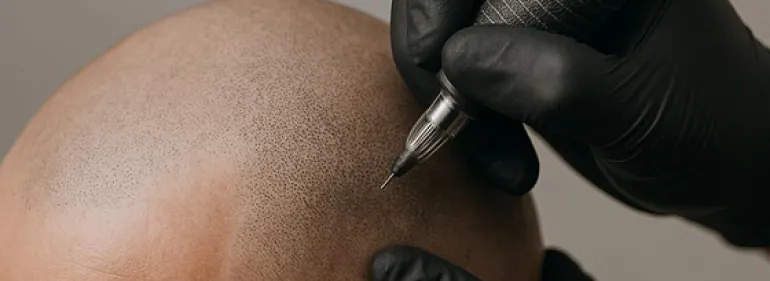
Scalp Micropigmentation (SMP) is a non-surgical cosmetic pigmentation procedure that uses a specialized device and fine needles to deposit small amounts of pigment into the scalp. These tiny impressions are designed to resemble the appearance of hair follicles.
Unlike hair transplantation, SMP does not grow new hair or restore follicles. Instead, it creates an optical effect that can make thinning areas less noticeable by reducing the visual contrast between the scalp and existing hair.
SMP may be used to create the appearance of a closely shaved hairstyle, define a hairline, or provide visual camouflage for certain types of hair thinning and scalp scars.
The treatment is customized according to your scalp, existing hair, skin tone, hair-loss pattern, and desired result. Because pigment is implanted into the skin, the procedure is considered a form of long-lasting cosmetic pigmentation, and the colour or appearance may change over time.
Benefits of Scalp Micropigmentation
Natural-Looking Hairline Definition
A carefully designed hairline can create the appearance of a neat, closely shaved hairstyle that complements your facial features.
Visual Camouflage for Thinning Hair
Pigment impressions can reduce the contrast between visible scalp and existing hair, making selected thinning areas less noticeable.
Scalp Scar Camouflage
In suitable cases, SMP may help camouflage the appearance of certain healed scalp scars. A professional assessment is necessary to determine suitability.
Low-Maintenance Cosmetic Result
Once healed, SMP can provide a consistent follicle-like appearance without the daily application of hair fibres or scalp concealers.
Who Is a Good Candidate for Scalp Micropigmentation?
SMP may be suitable for people who:
- Have a receding hairline or visible thinning areas.
- Prefer the appearance of a closely shaved or buzz-cut hairstyle.
- Want to create the visual impression of greater scalp density.
- Have certain healed scalp scars they wish to camouflage.
- Prefer a non-surgical cosmetic alternative to hair restoration surgery.
- Want to reduce the contrast between their scalp and remaining hair.
A consultation is essential. SMP is not suitable for every scalp or hair-loss condition. People with active scalp infections, inflammation, open wounds, or certain skin disorders may need to postpone or avoid treatment.
If you are experiencing sudden, unexplained, or progressive hair loss, consult a dermatologist or qualified healthcare professional to identify the cause before pursuing a cosmetic camouflage treatment. SMP does not treat the underlying cause of hair loss.
Our Scalp Micropigmentation Treatment Process
Step 1: Consultation and Scalp Assessment
We discuss your hair-loss pattern, preferred hairstyle, scalp condition, and expectations. Your practitioner evaluates whether SMP is appropriate for your needs.
Step 2: Hairline Design and Mapping
The proposed hairline and treatment areas are planned to complement your facial proportions, existing hair, and preferred look.
Step 3: Pigment Selection and Preparation
Pigment colour and technique are selected with your scalp and hair characteristics in mind. The treatment area is prepared using appropriate hygiene procedures.
Step 4: Scalp Micropigmentation Application
The practitioner creates carefully spaced pigment impressions to replicate the appearance of hair follicles. The density and placement are guided by the agreed treatment plan.
Step 5: Healing and Follow-Up Sessions
SMP is commonly completed over multiple sessions to build the desired appearance gradually. Follow-up visits allow the practitioner to assess healing, pigment retention, and whether further refinement is appropriate.
Types of Scalp Micropigmentation Treatments
Hairline Restoration Effect
Creates the appearance of a defined, natural-looking hairline for people with a receding hairline or a closely shaved hairstyle.
Crown and Thinning Area Camouflage
Helps reduce the visual contrast of selected thinning areas by adding follicle-like pigment impressions among existing hair.
Full Scalp Micropigmentation
Creates the appearance of a closely shaved hairstyle across a larger area of the scalp.
Scalp Scar Camouflage
May help make certain healed scars less noticeable by blending pigment impressions with the surrounding scalp. Results depend on the scar and skin condition.
Scalp Micropigmentation vs. Hair Transplant vs. Hair Fibres
| Feature | Scalp Micropigmentation | Hair Transplant | Hair Fibres |
| Treatment type | Cosmetic pigmentation | Surgical hair restoration | Temporary cosmetic product |
| Grows new hair | No | Can transplant hair follicles | No |
| Main purpose | Creates a follicle-like visual effect | Moves hair follicles to selected areas | Makes existing hair appear fuller |
| Longevity | Long-lasting; may need maintenance | Transplanted hair can be long-lasting, depending on individual factors | Usually removed during washing |
| Recovery | Skin healing is required | Surgical recovery is required | Usually no procedure-related recovery |
| Best suited for | People seeking a cosmetic scalp effect | Suitable candidates seeking hair restoration | People wanting a temporary appearance change |
The right option depends on your goals, the cause of hair loss, your scalp condition, and professional assessment. SMP can complement other hair restoration approaches, but it does not replace medical treatment for hair loss.
How Long Does Scalp Micropigmentation Last?
Scalp Micropigmentation is a long-lasting cosmetic pigmentation treatment. Its appearance can gradually soften or change over time, and some people may choose maintenance sessions.
Longevity depends on several factors:
- Skin type and individual healing response.
- Pigment formulation, colour, and implantation technique.
- Sun exposure and skincare habits.
- The original density and placement of pigment.
- Natural changes in hair growth and scalp appearance.
Because pigment is implanted into the skin, complete fading is not guaranteed. Changes in pigment colour or appearance may require professional assessment, and removal can be difficult.
Scalp Micropigmentation Aftercare
Following your practitioner's aftercare instructions is important for supporting healing and reducing avoidable complications.
- Keep the treated scalp clean according to the recommended routine.
- Avoid scratching, picking, or rubbing the treated area.
- Avoid swimming, saunas, and excessive sweating during the recommended healing period.
- Avoid direct sun exposure on the healing scalp.
- Do not apply unapproved products or hair treatments to the treated area.
- Follow your practitioner's instructions regarding when to resume shampooing, exercise, and your usual scalp-care routine.
- Attend follow-up appointments as advised.
Mild redness, tenderness, or sensitivity may occur after treatment. Seek medical advice if you experience worsening pain, spreading redness, pus, fever, or other signs of infection.
Frequently Asked Questions About Scalp Micropigmentation
What is Scalp Micropigmentation?
Scalp Micropigmentation is a non-surgical cosmetic pigmentation procedure that places tiny pigment impressions in the scalp to create the appearance of hair follicles.
Is Scalp Micropigmentation a permanent treatment?
SMP is considered long-lasting cosmetic pigmentation. The appearance may soften or change over time, but pigment can remain visible for years and may not disappear completely.
Does Scalp Micropigmentation grow hair?
No. SMP creates the visual appearance of hair follicles but does not stimulate hair growth or restore lost hair follicles.
How many SMP sessions are needed?
Several sessions are commonly used to build the desired appearance gradually. The number of appointments depends on the treatment area, desired density, skin response, and practitioner assessment.
Is Scalp Micropigmentation painful?
Comfort varies between individuals and depends on scalp sensitivity and treatment area. Some discomfort may occur. Discuss pain management and any relevant precautions with your practitioner.
Can SMP help with thinning hair?
SMP can reduce the visual contrast between the scalp and existing hair in suitable cases. It does not increase hair density biologically or stop hair loss.
Can Scalp Micropigmentation cover scars?
It may camouflage certain healed scalp scars. Suitability depends on the scar's condition, texture, colour, and location, so an individual assessment is necessary.
Can Scalp Micropigmentation be removed?
Removal may be possible through specialist treatment, but it can be difficult and is not guaranteed. Removal may cause scarring or pigment changes.
Is SMP suitable for women?
SMP may be considered by women with certain patterns of hair thinning or scalp visibility. A professional assessment is important, and unexplained hair loss should first be evaluated by a healthcare professional.
Will SMP look natural?
The treatment is designed to resemble hair follicles, but the final appearance depends on hairline design, pigment selection, placement, skin characteristics, and healing. Results cannot be guaranteed.
Gallery
Book your services
Ready to wake up with beautifully defined brows, lips, or eyeliner every day?