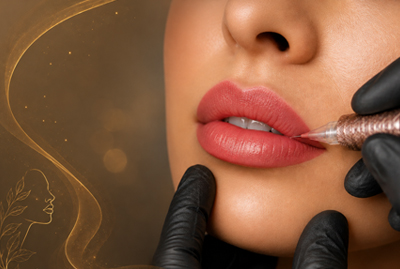
LIP BLUSH

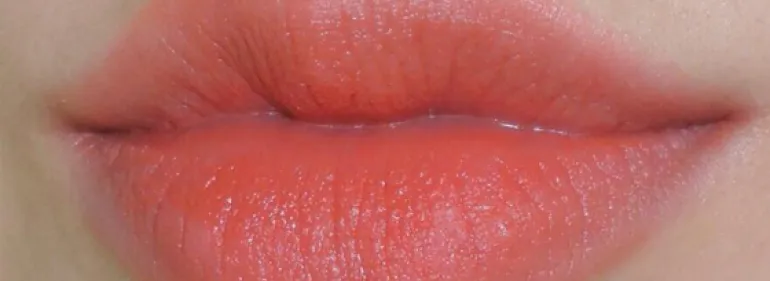
Beautifully Tinted Lips with a Soft, Natural-Looking Finish
Enhance the appearance of your lips with Lip Blush Permanent Makeup, a cosmetic tattooing treatment designed to add a soft wash of colour, improve the appearance of lip definition, and create a more balanced-looking lip tone. Enjoy a customised lip colour designed to complement your natural features.
2. What Is Lip Blush Permanent Makeup?
Lip Blush is a semi-permanent cosmetic tattooing procedure that deposits specialised pigment into the lips to create a soft, tinted appearance. It is designed to enhance the natural-looking colour of the lips, improve the appearance of lip definition, and create a more even-looking finish.
Unlike traditional lipstick, which needs to be applied and removed daily, Lip Blush is intended to provide longer-lasting colour enhancement. The treatment can be customised with different shades, from delicate nude pinks and rosy tones to warmer peach and deeper natural-looking colours.
The procedure is planned according to your natural lip colour, skin undertone, lip shape, and preferred result. The colour generally appears more intense immediately after treatment and softens as the lips heal.
Lip Blush is not the same as lip filler. It enhances colour and visual definition but does not add physical volume to the lips.
Benefits of Lip Blush Permanent Makeup
- Natural-Looking Lip Colour
Adds a customised tint to the lips for a soft, fresh-looking appearance. - Enhanced Lip Definition
Helps improve the appearance of the natural lip border and overall lip definition. - Customised Colour Selection
Choose a shade based on your natural lip colour, undertone, and preferred finish. - More Even-Looking Lip Tone
Can help create a more uniform-looking colour appearance, although the degree of correction varies.
Who Is a Suitable Candidate for Lip Blush?
- Lip Blush may be suitable for adults who:
Want to enhance their natural lip colour.
Prefer a soft, tinted appearance instead of applying lipstick every day.
Want to improve the appearance of uneven lip tone.
Prefer a subtle enhancement of their natural lip border.
Understand that healed colour varies and results are not guaranteed to be perfectly uniform.
Can follow the recommended healing and aftercare instructions.
- Important suitability considerations:
- A professional consultation is essential before treatment. Clients should disclose allergies, skin sensitivities, previous cosmetic tattooing, cold sore history, and any relevant medical conditions or medications.
- People with a history of cold sores should discuss this with the practitioner and their healthcare professional before treatment. Lip trauma can trigger an outbreak, and prescribed antiviral prevention may be appropriate in some cases. Active cold sores, infections, open wounds, or inflammation in the treatment area require postponement until fully resolved.
- Clients with a history of lip fillers, previous lip tattooing, scarring, or significant natural pigmentation should receive an individual assessment. Pregnancy, breastfeeding, immune-related conditions, and bleeding or healing concerns should also be discussed before proceeding.
- Lip Blush is a cosmetic tattooing procedure and carries risks such as infection, allergic reactions, scarring, uneven pigment retention, and cold sore reactivation.
Lip Blush Treatment Procedure
- Step 1: Consultation and Lip Assessment
The practitioner reviews your natural lip colour, shape, skin undertone, medical history, and desired result. Previous lip treatments and cold sore history should be discussed. - Step 2: Pigment and Colour Selection
A suitable pigment shade is selected after considering your natural lip colour, undertone, and desired healed appearance. The practitioner explains that the healed shade may differ from the initial colour. - Step 3: Lip Mapping and Design
The natural lip border and shape are assessed and mapped. The proposed design is reviewed with you before the procedure begins. - Step 4: Pigment Application
Using appropriate cosmetic tattoo equipment and hygiene precautions, the practitioner deposits pigment into the lip area using the selected technique.
Popular Lip Blush Colour Styles
Nude Pink Lip Blush
A delicate pink-toned look for clients who prefer subtle colour enhancement.
Rosy Lip Blush
A soft rosy shade that creates a naturally tinted appearance.
Peach Lip Blush
A warm peach-inspired colour for clients who prefer a fresh, warm-toned finish.
Berry Lip Blush
A deeper pink or berry-inspired shade for a more noticeable tint.
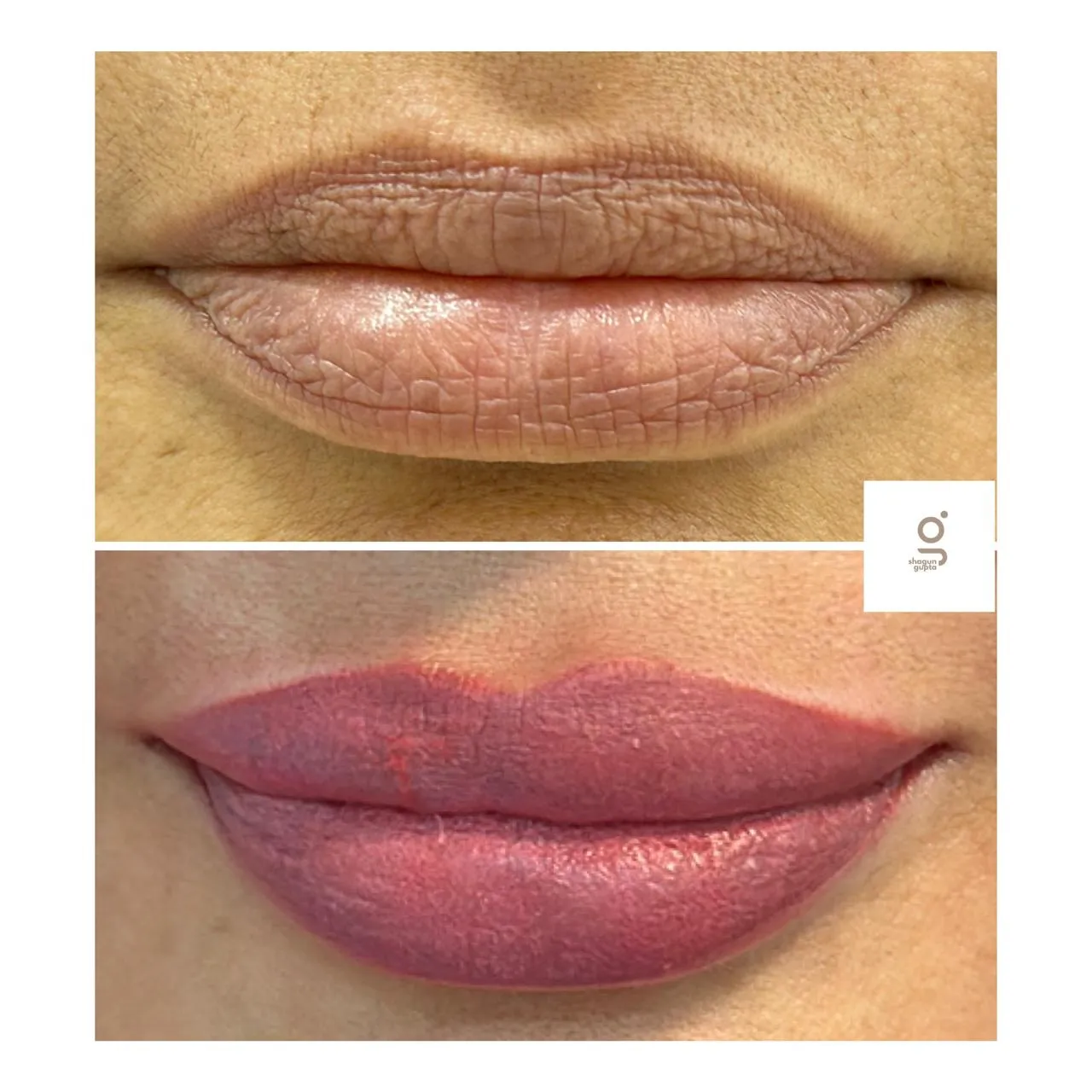
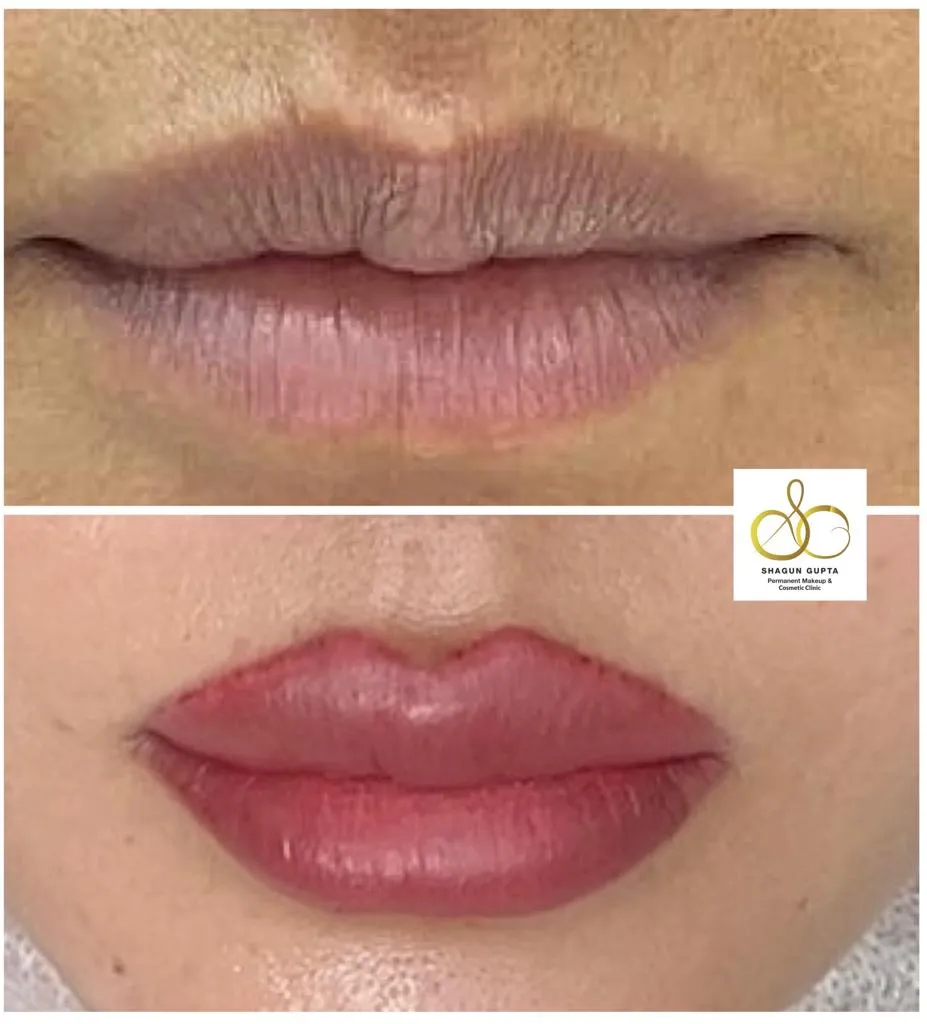
Colour availability and suitability depend on the clinic's pigment range, natural lip colour, undertone, and practitioner assessment. Reference photographs are illustrative, not guaranteed results.
Lip Blush vs. Traditional Lipstick vs. Lip Filler
| Feature | Lip Blush | Traditional Lipstick | Lip Filler |
|---|---|---|---|
| Main purpose | Adds cosmetic pigment to lips | Adds temporary colour | Adds physical volume or shape |
| Application | Cosmetic tattooing | Topical makeup | Injectable treatment |
| Duration | Long-lasting, gradually fades | Usually removed daily | Varies by filler and individual |
| Colour customisation | Selected before treatment | Can be changed anytime | Does not primarily add colour |
| Lip volume | Does not add volume | Does not add volume | Can add volume |
| Maintenance | Possible touch-up or specialist assessment | Reapply as needed | Further treatment may be chosen |
How Long Does Lip Blush Last?
Lip Blush is designed to provide long-lasting colour enhancement, but the duration varies between individuals. Factors that influence pigment retention include:
Natural lip characteristics and skin type.
Pigment formulation and application technique.
Individual healing and immune response.
Sun exposure and lifestyle habits.
Skincare and exfoliating products used around the lips.
Aftercare and previous cosmetic tattooing.
The colour may soften as the lips heal and gradually fade over time. Some clients may choose a professional touch-up after full healing, depending on the result.
Lip Blush should not be considered completely temporary. Pigment may remain in the skin for a long time, and complete fading is not guaranteed.
Lip Blush Healing Process
Healing is individual, but clients commonly notice several changes during recovery:
Immediately after treatment
Initial stage
The lips may appear brighter or more intense than the intended healed colour. Mild swelling, tenderness, and redness can occur.
Early healing
The lips may feel dry or tight and develop light flaking. Colour may appear uneven while the surface heals.
Colour settling
The visible colour may temporarily look lighter or less defined as the skin recovers. Avoid judging the final result too early.
Fully healed appearance
The colour gradually settles. The practitioner can assess the healed result and advise whether any refinement is appropriate.
Healing timelines vary. Follow your practitioner's instructions rather than relying on a fixed day-by-day schedule.
10. Lip Blush Aftercare Instructions
Proper aftercare supports healing and helps reduce the risk of complications.
Follow the clinic's specific cleaning and moisturising instructions.
Keep the lips clean and avoid touching them unnecessarily.
Do not pick, peel, bite, or scrub flaking skin.
Use only the aftercare products recommended by your practitioner.
Avoid lipstick, lip gloss, and other cosmetic products on the treated area until it has healed and your practitioner approves.
Avoid spicy, very hot, or irritating foods if they cause discomfort during early healing.
Avoid swimming, saunas, and activities that may expose the lips to contamination until healing is complete.
Avoid direct sun exposure during healing and follow appropriate sun-protection guidance once healed.
Avoid lip scrubs, chemical exfoliants, and aggressive skincare around the treated area until fully healed.
Attend the recommended follow-up appointment.
Cold sore precautions: If you have a history of cold sores, discuss preventive treatment with your healthcare professional before your appointment. If blisters or suspected cold sores develop, contact a healthcare professional promptly.
Seek medical attention for increasing pain, spreading redness, pus, fever, significant swelling, or other signs of infection or an allergic reaction. Severe or rapidly worsening symptoms need urgent assessment.
Frequently Asked Questions
1. What is Lip Blush Permanent Makeup?
Lip Blush is a cosmetic tattooing treatment that deposits pigment into the lips to create a soft, tinted appearance. It is designed to enhance natural-looking lip colour and definition.
2. Is Lip Blush permanent or semi-permanent?
It is commonly described as semi-permanent because the colour gradually fades. However, pigment may remain in the skin for years, and complete fading is not guaranteed.
3. Does Lip Blush make lips look bigger?
Lip Blush does not physically increase lip volume. It can enhance the appearance of the natural lip border and create a more defined-looking shape.
4. Is Lip Blush painful?
Comfort levels vary. Some clients experience tenderness or discomfort. Appropriate comfort measures can be discussed during the consultation.
5. How long does the Lip Blush procedure take?
The appointment duration depends on consultation, lip mapping, pigment selection, and the application technique. Your practitioner can provide an estimated appointment time.
6. Can Lip Blush correct dark or uneven lips?
Lip Blush may help improve the appearance of uneven lip colour, but results depend on the natural pigmentation and individual suitability. More deeply pigmented lips may require a specialised assessment and treatment approach.
7. What colour should I choose for Lip Blush?
The colour should be selected according to your natural lip colour, undertone, and preferred healed result. Your practitioner can help you choose a suitable shade during the consultation.
8. Can I get Lip Blush if I have a history of cold sores?
A history of cold sores does not automatically mean you cannot have the treatment. However, lip tattooing can trigger an outbreak. Discuss preventive medication with your healthcare professional before booking.
9. Can I wear lipstick after Lip Blush?
Avoid applying lipstick or other makeup to the treated lips until healing is complete and your practitioner confirms it is safe.
10. Is Lip Blush suitable for all skin tones?
Lip Blush can be considered for a range of skin tones, but pigment selection and treatment planning must be customised. Natural lip pigmentation can affect the final colour.
11. Can I undergo Lip Blush after lip fillers?
Previous lip filler treatment should be disclosed during consultation. The practitioner should assess the lips and determine suitable timing, taking into account the filler treatment and individual circumstances.
12. Is a touch-up necessary after Lip Blush?
Not every client needs a touch-up. A follow-up assessment after complete healing helps determine whether additional pigment application is appropriate.
12. Why Choose Our Lip Blush Permanent Makeup Service?
Beautiful Lip Blush results begin with careful planning, suitable pigment selection, and an understanding of individual lip characteristics.
Our treatment approach focuses on:
Personalised consultation: Understanding your preferred colour and lip enhancement goals.
Customised pigment selection: Choosing shades based on natural lip colour and undertone.
Lip shape assessment: Planning the treatment around your natural lip border.
Hygiene and safety: Following appropriate infection-control procedures and using sterile equipment.
Professional aftercare guidance: Helping you understand the healing process and care requirements.
Realistic expectations: Explaining pigment retention, colour changes, limitations, and possible touch-ups.
Gallery
Videos

Book your services
Ready to wake up with beautifully defined brows, lips, or eyeliner every day?